Ultimate Guide to Key Multicultural and Diversity Events
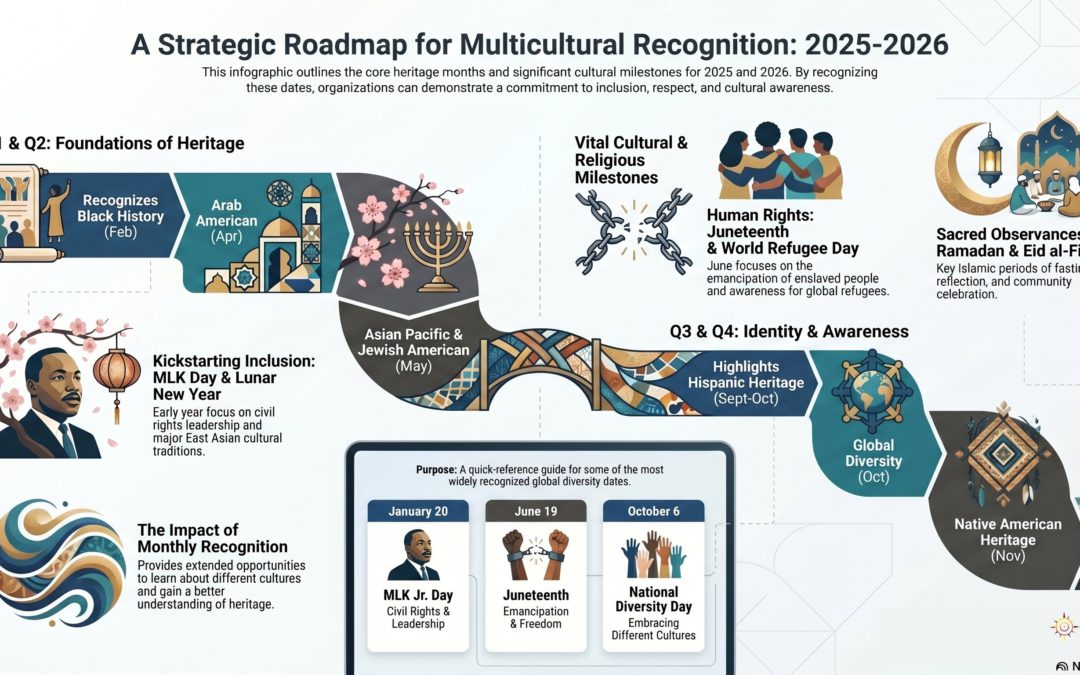
Honoring diversity throughout the year provides an opportunity to learn about different cultures, gain a deeper understanding of our multicultural heritage, and demonstrate a commitment to inclusion. Tracking these events helps organizations and individuals build awareness around representation and fairness while recognizing the profound impact of diverse populations.
Whether you are planning a company diversity calendar or simply looking to expand your cultural awareness, this is not an exhaustive list, but it highlights many widely recognized cultural, religious, and international observances to keep on your radar.
Here is a month-by-month guide highlighting important multicultural and inclusion events for 2025 and 2026:
January
January focuses on celebrating the many ways people connect, express identity, and remember the past.
- Martin Luther King Jr. Day: Celebrated on the third Monday in January (January 20 in 2025; January 19 in 2026), honoring Dr. King’s leadership in the civil rights movement.
- Lunar New Year: A major celebration for many East Asian cultures. In 2025, it begins on January 29, ringing in the Year of the Earth Snake.
- World Braille Day (Jan 4): A United Nations observance highlighting the importance of Braille for visually impaired and blind individuals.
- International Holocaust Remembrance Day (Jan 27): A day promoting Holocaust education and marking the anniversary of the liberation of Auschwitz-Birkenau.
February
February is widely recognized as Black History Month, which celebrates African American culture, history, and achievements.
- World Interfaith Harmony Week (Feb 1-7): Encourages cooperation and respect among people of different faiths.
- Ramadan: A sacred month of fasting, prayer, and reflection in Islam. Because it is based on the lunar calendar, its start varies; it is expected to begin March 1 in 2025, and shift to around February 18 in 2026.
March
March is observed as Women’s History Month, highlighting equality and global accomplishments.
- Holi: A vibrant Hindu festival celebrating the arrival of spring, community, and the triumph of good over evil. In 2025, it is celebrated on March 14, and around March 4 in 2026.
- International Women’s Day (Mar 8): A global call for gender equality and a celebration of women’s achievements.
- Eid-al-Fitr: Known as the “Festival of Breaking the Fast,” this holiday marks the end of Ramadan (e.g., March 29, 2025).
- Cesar Chavez Day (Mar 31): Honors the contributions of the Mexican American activist and labor leader.
April
April is celebrated as Arab American Heritage Month, honoring the culture and contributions of Arab Americans. It is also World Autism Month, promoting understanding for autistic individuals.
- Passover: A Jewish holiday commemorating the Israelites’ liberation from slavery in Egypt (e.g., April 2-9, 2026).
- Easter: A significant Christian holiday celebrating the resurrection of Jesus Christ, taking place on April 20 in 2025, and April 5 in 2026.
- Vaisakhi: An important Sikh and Hindu festival marking the spring harvest and the Sikh New Year (April 13 in 2025; April 14 in 2026).
- Gathering of Nations (Apr 25-27, 2025): A massive gathering where over 500 Native American tribes honor their culture.
May
May is a busy month for diversity, observing Mental Health Awareness Month, Asian Pacific American Heritage Month, Jewish American Heritage Month, and Haitian Heritage Month.
- National Day of Awareness for Missing and Murdered Indigenous Women and Girls (May 5): Raises awareness of violence against Indigenous women, girls, and Two-Spirit individuals.
- International Day Against Homophobia, Transphobia, and Biphobia (May 17): Highlights global discrimination and violence against LGBTQ+ people.
- World Day for Cultural Diversity (May 21): Recognizes cultural diversity as a wellspring of creativity, exchange, and innovation.
June
June is celebrated globally as Pride Month for the LGBTQ+ community, as well as National Immigrant Heritage Month, which honors the profound impact of immigrants.
- Loving Day (Jun 12): Commemorates the 1967 Supreme Court decision that eliminated bans on interracial marriage in the U.S..
- Juneteenth: Marks the emancipation of enslaved African Americans. (Note: Celebrated on June 19 to mark the 1865 announcement of freedom in Texas, though some 2025 calendars observe related events on June 18).
- World Refugee Day (Jun 20): Raises awareness about the struggles and plight of refugees globally.
July
July marks Disability Pride Month and includes key observances tied to national history and gender identity.
- International Non-Binary People’s Day (Jul 14): A global observance raising awareness of non-binary identities.
- Nelson Mandela International Day (Jul 18): Honors Mandela’s legacy by encouraging community service.
August
August recognizes important themes of humanitarianism and intersectionality.
- International Day of the World’s Indigenous Peoples (Aug 9): Celebrates the richness of global indigenous cultures while acknowledging the unique challenges they face.
- Women’s Equality Day (Aug 26): Marks the certification of the 19th Amendment, which granted women in the U.S. the right to vote.
September
September kicks off National Hispanic Heritage Month (September 15 – October 15), which celebrates the rich heritage and contributions of Hispanic and Latino Americans.
- World Suicide Prevention Day (Sep 10): A global initiative aimed at strengthening prevention efforts and raising mental health awareness.
- Constitution Day and Citizenship Day (Sep 17): Commemorates the 1787 ratification of the U.S. Constitution and honors all who have become U.S. citizens.
- International Day of Sign Languages (Sep 23): Promotes the rights of Deaf communities and raises awareness of sign languages.
October
October is Global Diversity Awareness Month, dedicated to increasing acceptance of diverse cultures, as well as Breast Cancer Awareness Month.
- National Diversity Day (Oct 6): Encourages embracing different ideologies, religions, ages, and nationalities present in the country.
- Indigenous People’s Day / Native American Day (Oct 13): Honors Native American culture and history.
- International Pronouns Day (Oct 21): Encourages the respectful sharing and usage of correct personal pronouns.
November
November is National American Indian and Alaska Native Heritage Month (also known as Native American Heritage Month), honoring the history and traditions of indigenous people in the U.S..
- Dia de los Muertos (Nov 1-2): A vibrant three-day celebration remembering friends and relatives who have passed away.
- Veterans Day (Nov 11): Honors U.S. military veterans for their service.
- Transgender Day of Remembrance (Nov 20): Memorializes individuals who have been killed due to anti-transgender violence.
December
December is Universal Human Rights Month, promoting advocacy and protection for all people.
- International Day of Persons with Disabilities (Dec 3): Focuses on the well-being and rights of people with disabilities.
- Human Rights Day (Dec 10): Marks the 1948 adoption of the Universal Declaration of Human Rights.
- Christmas (Dec 25): Celebrates the birth of Jesus Christ in most Western Christian traditions.
- Kwanzaa (Dec 26 – Jan 1): A week-long celebration honoring African American culture and heritage, centered around seven guiding principles.
Why This Matters: Participating in and acknowledging these events is an important way to show a commitment to creating an inclusive society. Integrating these dates into your organization’s calendar helps teams plan respectfully, foster belonging, and stay aligned with modern workplace culture expectations.